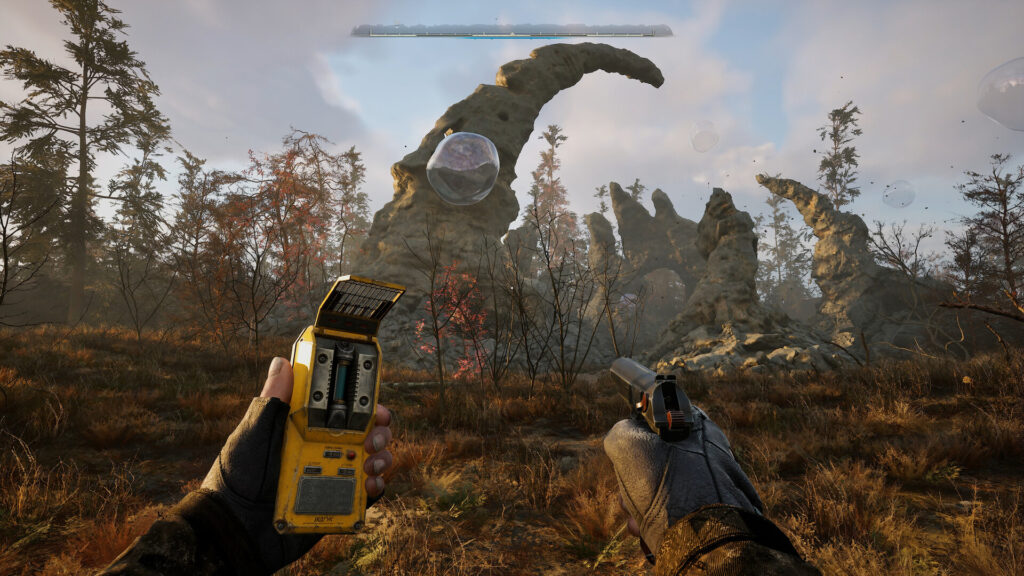
Earlier this month, Stalker 2 acquired an enormous model 2.0 replace to accompany the launch of its Value of Hope enlargement. Our Joshua Wolens says that—for these of us who’ve been patiently holding off whereas Stalker 2 finds a gradual footing—it’s the update that we’ve been waiting for, thanks largely to developer GSC Sport World’s Herculean enterprise of updating its engine from Unreal 5.1 to Unreal 5.5.4.
That effort, it appears, was effectively spent. However whereas they’re happy with the outcomes, GSC instructed PC Gamer in an interview at this 12 months’s Gamescom that the method of overhauling the sport’s engine after launch was a little bit of a nightmare.

When asked how that process went, GSC Game world COO and head of creative Maria Grygorovych responded with a question of her own: “Can I cry?”
Latest Videos FromPC Gamer
While an engine overhaul is a massive task for any game project, she said it was particularly involved in Stalker 2’s case.
“It was extremely hard because our [implementation of Unreal 5.1] was extremely customized. We had so much of our own code. It cost an enormous amount of time,” she said. “If you work closer to the vanilla version, it’s much easier. It depends on the process and how you build it.”

And the way GSC built it, CEO and head of game direction Ievgen Grygorovych explained, made the process—which he agreed was “insane”—about as complicated as possible.
“When we were starting the game, we started on Unreal Engine 4. Then we transitioned to an early version of 5, but the features for open world support available at the time weren’t compatible with the scale of game we were doing. We did a lot of custom changes to make it happen,” he said. “Then, in newer versions, Epic introduced their own systems that were doing the same things, but in their own way. To upgrade to those newer versions, we had to remerge everything. For us, it took much more time and effort than it might for other projects.”
While the engine upgrade meant an abundance of growing pains, Ievgen said it brought benefits for earlier versions of the game, too.

“Because we were doing the upgrade, we could identify lots of optimizations that we could backport and release in [Stalker 2] version 1.7, where we had a huge optimization boost. Most of that was delivered because of things we backported while we were [working on the engine update],” he said. “We could’ve waited until we transitioned to the new engine, but it would’ve taken a long time. Or we could backport it, test it, and give those optimizations much earlier. And we decided to move that way because it gave millions of people better performance.”
The post-launch engine overhaul may have introduced an array of headaches, but both devs said Unreal is still a welcome change from the X-Ray engine that powered prior Stalkers. Asked whether they missed X-Ray, both responded with a firm, “No.”
“We need a lot of engineers, and it’s impossible to find like 60 engineers who have experience working with X-Ray,” Ievgen said. “It’s much more possible to find 60 engineers who know how to work with Unreal.”
It’s not only easier for the studio: Maria said shifting to Unreal is better for the career prospects of GSC’s developers, who would likely have trouble finding work in the future if their only experience was with a proprietary engine.
“It’s a lot of pros and cons with [a standardized engine like Unreal]. It’s not a matter of right decision or wrong decision,” she said. “Each company needs to decide for themselves. This was the best solution for us.”
“The engine is a tool,” Ievgen said. “You’re choosing the right tool for the right project.”

Hi, I’m Rishab. I’m a passionate pc gamer and an avid video game content writer. I have been involved with video games for over 2 decades now, and even today, after playing an astronomical number of games over the years, I’m still eager for more. In my free time, you will find me enjoying a hot cup of coffee and playing my favorite relaxing fishing game, Dave the Diver.