

Lauren spends most of her time useless in League of Legends, or equally as useless in Valorant. Do not ask her about Vampire: The Masquerade.

Printed:
I’ve by no means been there on ‘day one.’ Overwatch; League of Legends; World of Warcraft – all video games that I’ve joined in on additional down the road; communities I’ve assimilated into, not at all times been part of. I wasn’t there when Wrath of the Lich King dropped, or when Twisted Destiny had a world final as a random potential in League. I wasn’t there when Overwatch gained its Sport Award, or when the Cataclysm sundered Azeroth. I used to be there, nevertheless, when Valorant launched. For as soon as in my life, I am an ‘OG.’
Valorant was my first ever ‘project’ within the videogames business. I spent day after day trawling by video clips for social media posts, maintaining with each patch notice. However, furthermore, it consumed my each waking second – I might end up work, play Valorant. Write my college essay, play Valorant. In some methods it was simply as addictive as League of Legends, however I knew, in my coronary heart of hearts, I might been there from the beginning. That is a particular sort of feeling.
Watching Valorant develop from relative infancy to the seminal FPS game that it’s at present has been fascinating, particularly in an ecosystem as fragile as our present one. I keep in mind the great ol’ days of Valorant First Strike, the sport’s first ever esports event. I keep in mind when OG Jett may Updraft twice; when Viper had two Snake Chunk grenades as an alternative of 1. I’ve had the pleasure of watching Valorant evolve into what it’s at present; a multiplayer powerhouse that, whereas not with out its points, has cemented itself as one of the crucial modern, fast-paced shooters of all time.
However how did we get right here?

Valorant, if you have not performed it, is a mashup of Counter-Strike’s tactical, site-take-focused gameplay, melded with the hero shooter really feel of Overwatch. You should purchase weapons from a set arsenal of weapons, and select your particular Brokers, every of which have their very own, distinctive skills. Brokers are cut up into 4 classes – the aggressive Duelists, space-managing Sentinels, site-taking Initiators, and zoning Controllers (suppose People who smoke from CS). As a group of 5, you both must take down your foes and plant the Spike, or keep at bay the enemies from taking your website. It is comparatively easy – in concept.
You could possibly argue that, on paper, Valorant is not something new; as I stated, it is a medley of Overwatch and Counter-Strike. The important thing right here is that it appeared at precisely the suitable time. 2020 was the relative calm earlier than the CS2 and Overwatch 2 storm – neither sport was particularly decline, however issues had been comparatively quiet. Valorant – a brand new Riot sport – burst onto the scene with a shiny new premise, slick visuals, and closely aggressive, simply ‘esportable’ gameplay. It picked its second completely.
Regardless of the launch of Overwatch 2 – which, for a lot of, failed to essentially obtain what it got down to – and Counter-Strike 2 later down the road, Valorant has endured. Whereas Riot would not share participant statistics, getting right into a match is fast, and the current London Masters broke viewership data for being the sport’s most-watched esports occasion up to now, beating out Counter-Strike’s Cologne Main, which ran parallel to it. The place the likes of XDefiant, Harmony, and others have failed, Valorant has stood – and continues to face – by itself two toes. It is spectacular; notably in a world the place on-line multiplayer games really feel like they’re rapidly going out of vogue.

There’s causes for that, although. First off, Valorant’s rollout of latest content material – be it new modes, maps, Brokers, or, very often, a brand new weapon – has remained constant. From the unique ten-Agent roster (11 counting Reyna), there at the moment are 29 characters to select from – that is 18 new characters over the course of six years. Three Brokers per 12 months has labored effectively – it would not oversaturate, and it provides Riot time to steadiness issues out a bit. It is sufficient to maintain you excited and to convey you again for that subsequent patch, but it surely’s not sufficient to swell the roster to the purpose of bloat.
It does imply, inevitably, that some mechanics have repeated themselves. There’s solely so some ways you can also make a grenade attention-grabbing, and there is solely a lot you are able to do with smokes. But, regardless of the apparent limitations, every Agent nonetheless feels distinctive. Viper’s poisonous clouds erode your well being over time, consuming away at you in the best way that poison ought to. Skye’s hawk-inspired flashes are in line with her Earth-warrior theme, whereas Reyna’s eerie, life-sapping powers distinction completely towards Clove’s fairy-esque sparkle. Riot’s Brokers have personalities, that is what attracts me to them over CS2’s generic Terrorists and Counter-Terrorists. They’re all so completely different, even when their mechanics are, in some instances, the identical.
I might be remiss to not point out Valorant’s artstyle right here as effectively. Riot is aware of the best way to artwork: it truly is that straightforward. You may inform a League of Legends splash artwork from a mile away, and Valorant’s vibrant but slick, nearly comedian guide model is in contrast to anything in the marketplace. Not solely does it look fairly, it is a assertion of intent: Valorant’s branding is crystal clear – it hits exhausting and quick, and it takes no names. Its paintings, and its gameplay extra broadly, displays that.

None of this issues, nevertheless, if the steadiness is off. One of many issues hero shooters and character-driven video games constantly come up towards is balancing. 2025 and 2026 had been dominated by Neon, Valorant’s feisty Filipina Duelist, and I keep in mind the nightmare that was release-day Chamber. Balancing isn’t simple, and in a live-service atmosphere, it will by no means be good. However, total, I believe, apart from a couple of blips, Riot has managed to maintain issues fairly constant.
Again at Masters London, I requested Lead Agent Designer Dan ‘penguin’ Hardison and Brokers & Reside Product Supervisor Tiffy ‘TiffyMunchsnax’ Tsay about having to cope with a whole lot of minute character and weapon interactions that might, if mixed, by accident break issues.
“We fight this downside by ensuring every character has a carved out place within the ecosystem, in order that while you’re studying issues you possibly can bunch them up into little classes or issues you can count on out of them,” Hardison tells me. “So long as we hold the foundations comprehensible and gamers can be taught them over time and be taught the conditions that characters are essentially the most helpful in, then they perceive the entire toolkit of the sport. That then helps us decide if a personality is doing an excessive amount of.”
That ties into minimizing participant frustration, and whereas Hardison says that “there’s some expectation that frustration goes to be a standard a part of the sport,” he says that Riot’s focus is “adapting over time.” I might argue that, usually, the group’s managed to do this – even when I might preferred Neon to take an arrow to the knee somewhat sooner than she did.

As the sport itself has grown into its personal world and ecosystem, nevertheless, so has its esports. I began out on this business as a pure esports journalist, and I have been fortunate sufficient to look at Valorant blossom into a real titan – one which, in some ways, feels secondary solely to League of Legends. In an interview at Masters, Valorant Esports’ Head of Product Technique, Invoice Pan, says that esports “has always been at the core of what the game is supposed to be.” Divorcing Valorant from esports is inconceivable, then – and in some ways, that is why I fell in love with it.
Aggressive videogames have at all times been in my soul – I thrive on the stress and the back-and-forth skirmishes. Whereas League of Legends nonetheless provides these high-octane outplay moments, getting a headshot in Valorant and watching the comedian book-style ‘bang’ by no means will get outdated. There is a rush of adrenaline that is typically lacking from League; I can solely get so enthusiastic about watching my ADC farm our lane, or sweeping the jungle for management wards. In Valorant, you possibly can’t take your eye off of the ball for a second; there could possibly be an invisible Yoru, or a Tejo missile coming from across the nook. That nearly frantic feeling is one thing I crave.
I’ve by no means fairly discovered a sport that intertwines that esports-esque adrenaline junkiness with normal gameplay. I have never felt that hype with CS or Overwatch. It is Valorant that is at all times pulled me again. I am not Paper Rex’s Jason ‘f0rsakeN’ Susanto, or Fnatic’s Jake ‘Boaster’ Howlett (I initially wrote SUMN FC, man am I outdated). However, Valorant makes me really feel like I could possibly be. That is one thing particular.
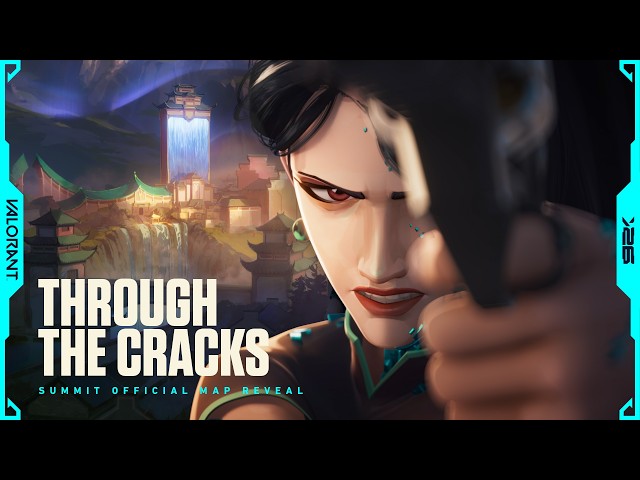
Valorant in 2026 has had a little bit of a rocky trip. There’s been a slew of wierd bugs, together with Cypher cameras with the ability to shoot darts once more, Omen smokes not functioning appropriately, in addition to Waylay and Neon hitting the bench a couple of times. It has been difficult; at some factors it is felt like Riot’s misplaced its grip somewhat. However, even then, I can not tear myself away.
Valorant is new faculty – an instance of what a contemporary multiplayer sport may be, and a reminder that we will truly produce top-tier on-line experiences regardless of what’s occurred to the Highguards or the Concords of the world. We simply must decide to doing one thing completely different.
“Individuals ought to play Valorant in 2026 as a result of it is a sport you possibly can actually spend a whole lot of hours on, and we’re dedicated to that imaginative and prescient,” Hardison says. “Relative to different video games within the business, we’re a long-term-oriented sport studio – you take a look at League, it has been supported for a very long time. We plan to do the identical factor for Valorant.”
Pan describes Valorant as being “born out of a undertaking of ardour;” one which “smashes collectively two completely different genres of video games [tactical shooters and hero shooters] which have by no means overlapped. Are you able to create an superior expertise the place you do not lose both? The reply may be very a lot sure. You may’t get each wherever else – you will get one or the opposite; you possibly can’t get each.
“You additionally get a strong world to expertise, with lore and tales and tradition; you do not actually get that in a whole lot of different video games, sadly,” he continues. “The writer develops an ideal sport, then they kind of go away it there, and the followers come and construct their very own communities across the sport, which is gorgeous, however I believe we care about constructing and fostering that group a bit greater than most.”
“There are few video games the place you will get such excessive highs and low lows on the emotional spectrum, and play with your mates and be taught such a deep ability that is additionally enjoyable.” Hardison says, prompting a nod from Tsay “We nonetheless have the identical urge for food for threat and innovation that we did 5 years in the past – actually, we in all probability have much more,” she says, and that, proper there, is thrilling, and precisely the mentality we’d like.

Hi, I’m Rishab. I’m a passionate pc gamer and an avid video game content writer. I have been involved with video games for over 2 decades now, and even today, after playing an astronomical number of games over the years, I’m still eager for more. In my free time, you will find me enjoying a hot cup of coffee and playing my favorite relaxing fishing game, Dave the Diver.