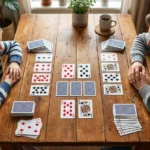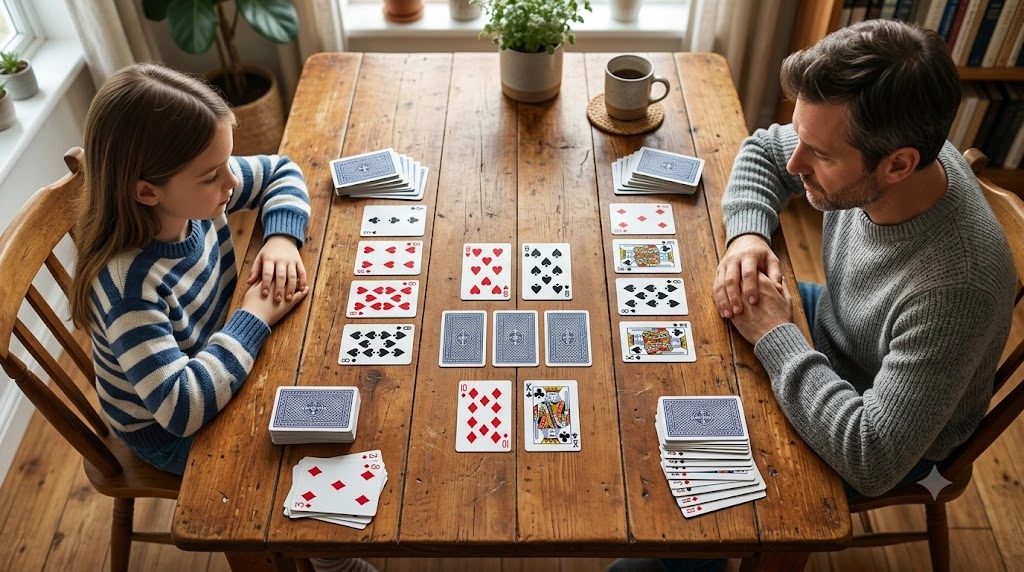
If you’ve got a deck of playing cards and ten minutes to kill, the War card game is probably the fastest way to turn boredom into a proper family showdown. It’s one of the oldest, simplest card games out there, built around a standard 52-card deck and two players who each want to walk away with every single card. There’s no bluffing, no strategy, and no scoring to remember. In this guide, you’ll learn the rules from the first shuffle to the final round, what happens when two cards tie, and a few variations worth trying once the classic version gets predictable. Whether you’re teaching a kid their first card game or need something easy for family game night, here’s everything you need to get started.
War Card Game Table of Contents
What Is the War Card Game?
It’s a comparison-style card game where two players face off, flip cards, and battle for control of the entire deck. There’s no reading opponents, no hand management, and no decisions to second-guess. Whoever flips the higher card wins, plain and simple. That simplicity is exactly why it’s one of the classic card games parents teach their kids before anything else.
Unlike poker or rummy, the rules don’t reward memory, math skills, or bluffing. It’s a luck-based card game from start to finish, which levels the playing field between a six-year-old and an adult.
That’s also what makes it one of the better kids’ card games and family card games around, needing nothing more than a standard 52-card deck. Sit two people down, and the game runs itself, no explanation beyond “highest card wins,” which is why it’s a reliable pick for casual card games on a road trip or a rainy family game night.
Also Read: How to Play Parcheesi
What Do You Need to Play War?
Getting started needs almost nothing. Grab a standard 52-card deck, skip the jokers, and find one other person to play with. That’s the entire shopping list for the War card game: no chips, no board, no extra pieces.
Suits don’t matter here. A spade, heart, club, or diamond carries zero weight in determining a winner; only the rank of the card counts. That keeps setup dead simple and means literally any deck of cards works, even a mismatched one from three different packs.
Number of Players
War is traditionally built for two players, splitting the deck evenly between them. That said, it easily stretches to three or four with slightly adjusted rules for splitting cards and resolving ties, covered below in the variations section. Just know that more players usually means longer games and bigger wars.
Card Ranking
Card ranking follows the usual order: Ace is high, then King, Queen, Jack, and downward to 2 as the lowest card. Suits carry no weight in card values and never act as a tie breaker, so two cards of the same rank, regardless of suit, count as equal and trigger a war. Getting comfortable with this ranking is the only real “rule” newer players need to memorize before their first hand.
Also Read: How To Find and Use Treasure Maps In Minecraft!
How to Set Up the War Card Game
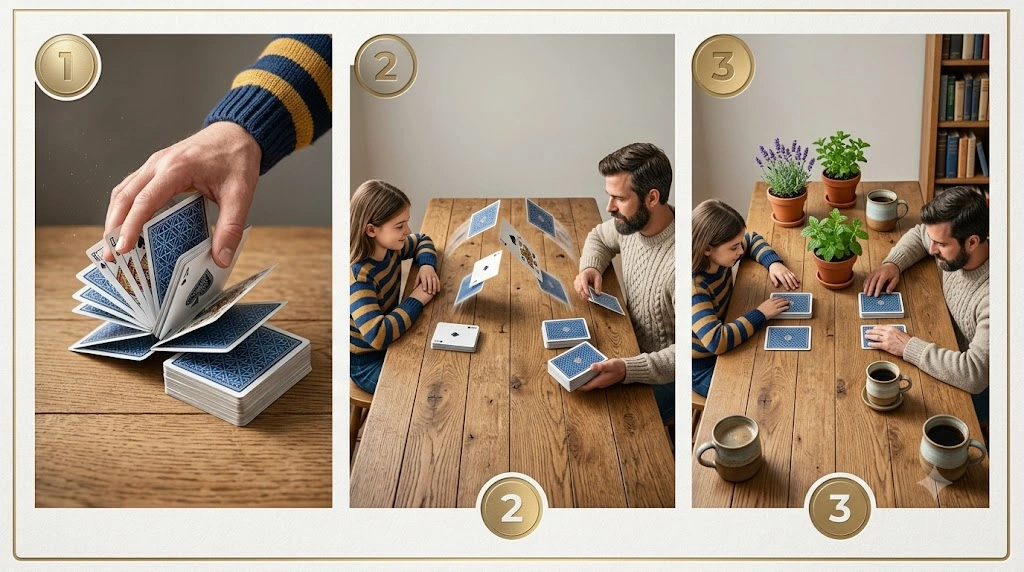
Setting up takes less than a minute. Start by giving the deck a thorough shuffle so the cards are properly randomized, since a poorly shuffled deck can make the game predictable or unfairly one-sided.
Once shuffled, deal every card in the deck, one at a time, face down to each player until the deck runs out. With two players, that means 26 cards each. Nobody looks at their cards during the deal, and nobody sorts through their pile afterward either.
Each player then squares their cards into a single face-down pile, sometimes called the draw pile. This becomes the stack you’ll flip from throughout the game. Keep it neat and don’t peek. That’s the entire setup, and it’s what keeps every round unpredictable from the first flip to the last.
Also Read: The Sims 5 System Requirements for PC
How to Play the War Card Game
Playing is as straightforward as it sounds, but here’s the exact sequence so nothing gets confused mid-game.
Playing a Regular Round
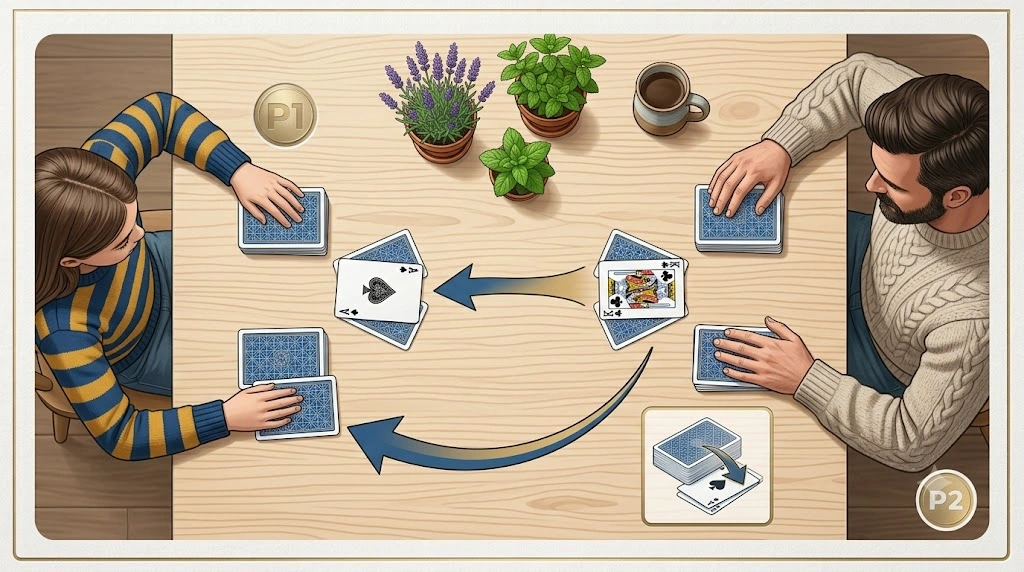
To start a round, both players reveal the top card of their pile at the same time, placing it face up in the middle. Whoever shows the higher-ranked card takes both cards and adds them to the bottom of their own pile. There’s no waiting your turn; both cards flip together. This is the core loop, repeated over and over until somebody runs out of cards.
What Happens During a War?
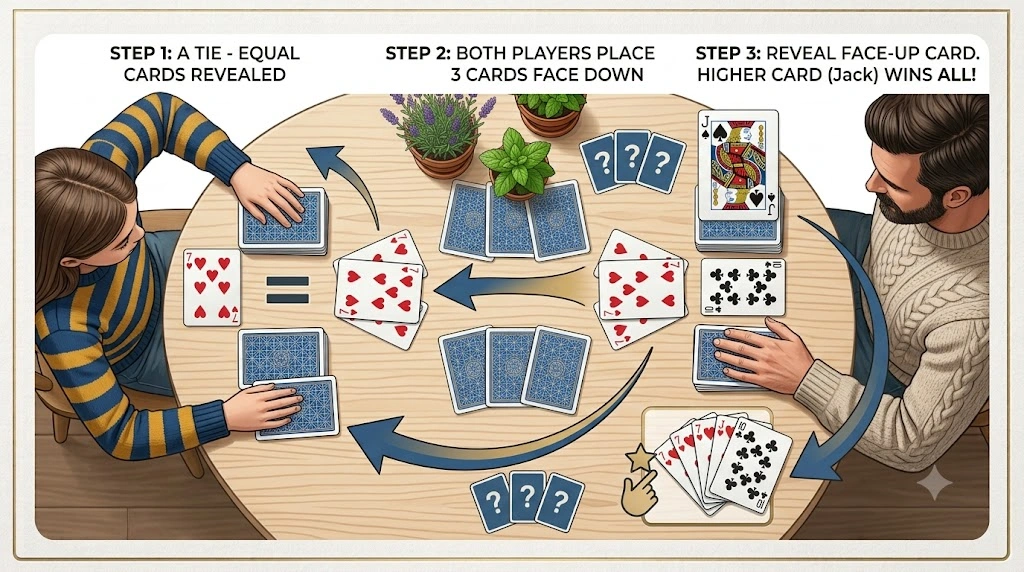
Occasionally, both players flip a card of the same rank, say two Sevens. That’s a tie, and it triggers what the game is actually named after: a war. Each player takes three cards from the top of their pile and places them face down in a row, without looking at them. Then each player flips one more card face up. Whoever’s face-up card ranks higher wins everything on the table, all six face-down cards, both original tied cards, and both new face-up cards. That winner adds the entire pile to the bottom of their stack. It’s a genuine swing moment, since a single war can hand over eight, ten, or more cards in one round.
Consecutive Wars
Sometimes even the face-up cards tie again. When that happens, the process repeats for another war round: three more cards face down, one more face up, until someone finally wins with a higher card. Every card from all the tied rounds goes to whoever wins the final flip. It’s rare, but back-to-back wars do happen and can hand over huge chunks of the deck at once.
Also Read: 10 Best Games Like The Forest To Play (Ultimate 2026 List)
How Do You Win the War Card Game?
There’s only one way to win: collect all the cards in the deck. Play continues round after round, war after war, until one player’s pile is empty and the other is holding all 52 cards. The goal has always been winning all the cards.
Since there’s no scoring system and no partial victories, patience matters more than most people expect. A player down to their last two or three cards can still claw back the entire deck if the shuffle favors them, since a single war can flip the lead. Games can end quickly if one player is unlucky early, or drag on for twenty, thirty minutes if the cards stay close to even.
See also: Dragon Ball Xenoverse 3 Release Date, Gameplay, Trailer, and Rumours
Rules to Remember While Playing War
A few small rules trip up beginners more than anything else:
- Suits never break a tie. Only card ranking decides who wins a round.
- Cards won during a round, or a war, go to the bottom of the winner’s pile, not the top.
- Players never look at their own pile or reorder it during play.
- A tie always means a war, no exceptions, no skipping straight to the next round.
- The game only ends when one player holds the entire deck of cards, or players agree to stop and count who has more.
Keep these five straight, and you’ll rarely argue over a disputed round again.
See also: How to Make a Furnace in Minecraft: Complete Guide for Beginners 2026
Popular Variations of the War Card Game
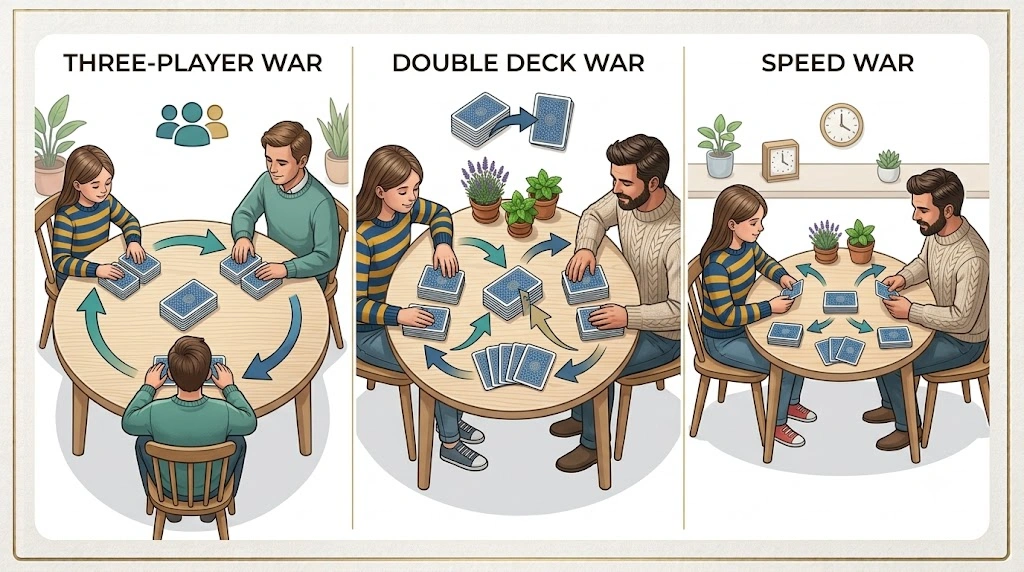
Once the classic version gets predictable, plenty of variations exist to mix things up, including ways to turn it into a proper multiplayer card game.
- Three-Player War
Adding a third player is simple: split the deck as evenly as possible, roughly 17 cards each, and everyone flips at once. The highest card among all three takes the pile. If two players tie for the highest card, only those two go to war while the third player sits out, then plays normally next round. It moves faster than the two-player version since more cards get eliminated each round.
- Double Deck War
Shuffle two full decks together and deal the combined 104 cards evenly between two players. Everything else stays the same, but wars become bigger and more frequent since there are now two of every card in play. Expect longer games and dramatically bigger swings when a war does happen. It’s a good pick when you want the classic game to last through a long car ride or a full family game night.
- Speed War
Speed War strips the game down for players who want a quicker match. Instead of a full 26-card pile, each player uses a smaller deck of 15 to 20 cards, which shortens the game to a few minutes instead of twenty or thirty. Everything else- ties, wars, the winning condition- works the same, just with fewer cards to burn through.
Also Read: How to Play Ludo: The Complete Beginner’s Guide
Tips for Playing the War Card Game
A few small adjustments make things more fun, especially for longer sessions:
- Agree on house rules before dealing, especially for what happens if a player runs out of cards mid-war. Some groups let that player use their last card as their face-up card; others rule it an automatic loss.
- Set a time limit for longer games. Twenty minutes is usually enough to call it and count who’s holding more cards, rather than letting a stubborn game run an hour.
- Keep piles squared and organized so cards don’t slide off the table or flip prematurely.
- For younger kids, remove face cards and play with just Ace through 10 to keep card ranking simpler.
- Shuffle thoroughly between games, not just at the first deal, so repeat matches don’t feel like reruns of the last one.
Benefits of Playing the War Card Game
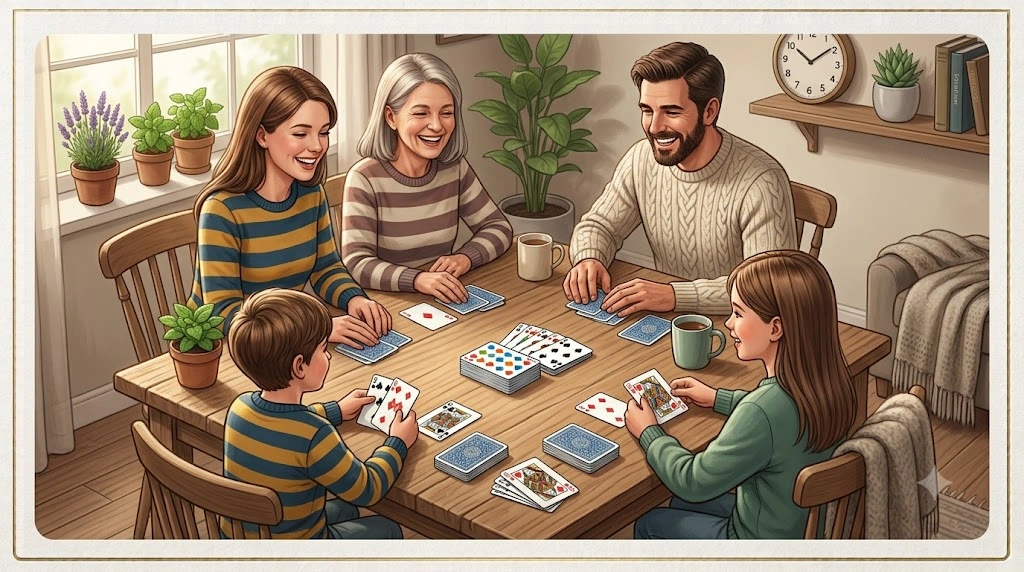
Beyond killing time, this game actually does some quiet developmental work, especially for kids. Comparing card ranking builds number recognition and reinforces the idea of greater-than and less-than before a child ever sees it written as math homework.
It also teaches patience. Watching a lead swing back and forth over a twenty-minute game shows kids that a bad start doesn’t guarantee a loss.
Socially, it’s one of the easier educational card games and indoor games to bring into family game night, since there’s nothing complicated to explain to a four- or five-year-old. Turn-taking, sitting still, and playing fair all get a low-stakes workout, and it doubles as a solid icebreaker for tabletop games night with strangers.
Common Mistakes Beginners Make
New players trip over a handful of predictable mistakes:
- Adding won cards to the top of the pile instead of the bottom. This lets a player accidentally see and count their next few draws, which ruins the randomness the game depends on.
- Forgetting that a war requires three face-down cards plus one face-up card, not just flipping again immediately.
- Arguing over suits when ranks tie, when suits genuinely don’t matter at all.
- Peeking at cards before it’s their turn to flip, especially kids who get impatient waiting.
- Not agreeing on house rules upfront, then arguing mid-game about what happens when someone runs low on cards.
Sorting these out before the first round starts keeps the whole game running smoothly.
Frequently Asked Questions About the War Card Game
- Can You Play War with More Than Two Players?
Yes. The rules adapt easily to three or four players. Split the deck evenly, have everyone flip at once, and the highest card takes the pile. Ties between two or more players trigger a war between just those players while everyone else continues normally on the next round.
- Is the War Card Game Based on Skill or Luck?
It’s entirely luck-based. Every outcome comes down to shuffling and deal order, with zero player input during play. There’s no strategy to learn, which is exactly why it works so well as a simple card game for young kids.
- How Long Does a Game of War Usually Last?
Anywhere from ten to forty minutes, depending on the shuffle and how often wars happen. Some games end quickly if one player gets unlucky early. Others drag on because the deck stays evenly split between both players for a long stretch. Setting a time limit is the easiest fix for a game that’s dragging.
- What Happens If a Player Runs Out of Cards During a War?
Most groups either declare that player the loser on the spot, or let them play their final card as the face-up card to finish that war. There’s no single official answer, so it comes down to whatever house rules you agree on beforehand.
- Can You Play War with Jokers?
Not in the standard version. The classic setup uses all 52 cards and skips jokers entirely. Some house variants add jokers as a wildcard that automatically wins any round, but that’s an optional twist, not the traditional rule set.
Final Thoughts
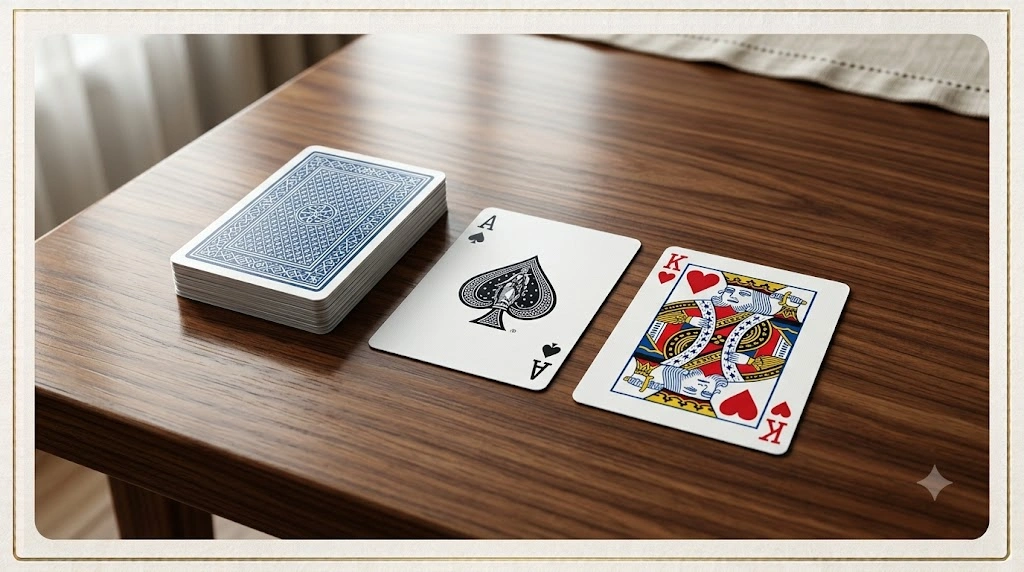
The War card game earns its spot among the most enduring, simple card games out there. It’s one of the easiest two-player card games around, needing no explanation beyond “highest card wins,” yet it somehow stays interesting generations later. If the classic version starts feeling too familiar, try Three-Player War, Double Deck War, or Speed War, or bring in a house rule of your own. Deal a deck between two players, and you’ve got everything you need for a proper family game night. Grab a deck of playing cards, teach someone the rules in under a minute, and get playing. For more gaming article visit Indian Gaming Community!

Hi, I’m Rishab. I’m a passionate pc gamer and an avid video game content writer. I have been involved with video games for over 2 decades now, and even today, after playing an astronomical number of games over the years, I’m still eager for more. In my free time, you will find me enjoying a hot cup of coffee and playing my favorite relaxing fishing game, Dave the Diver.